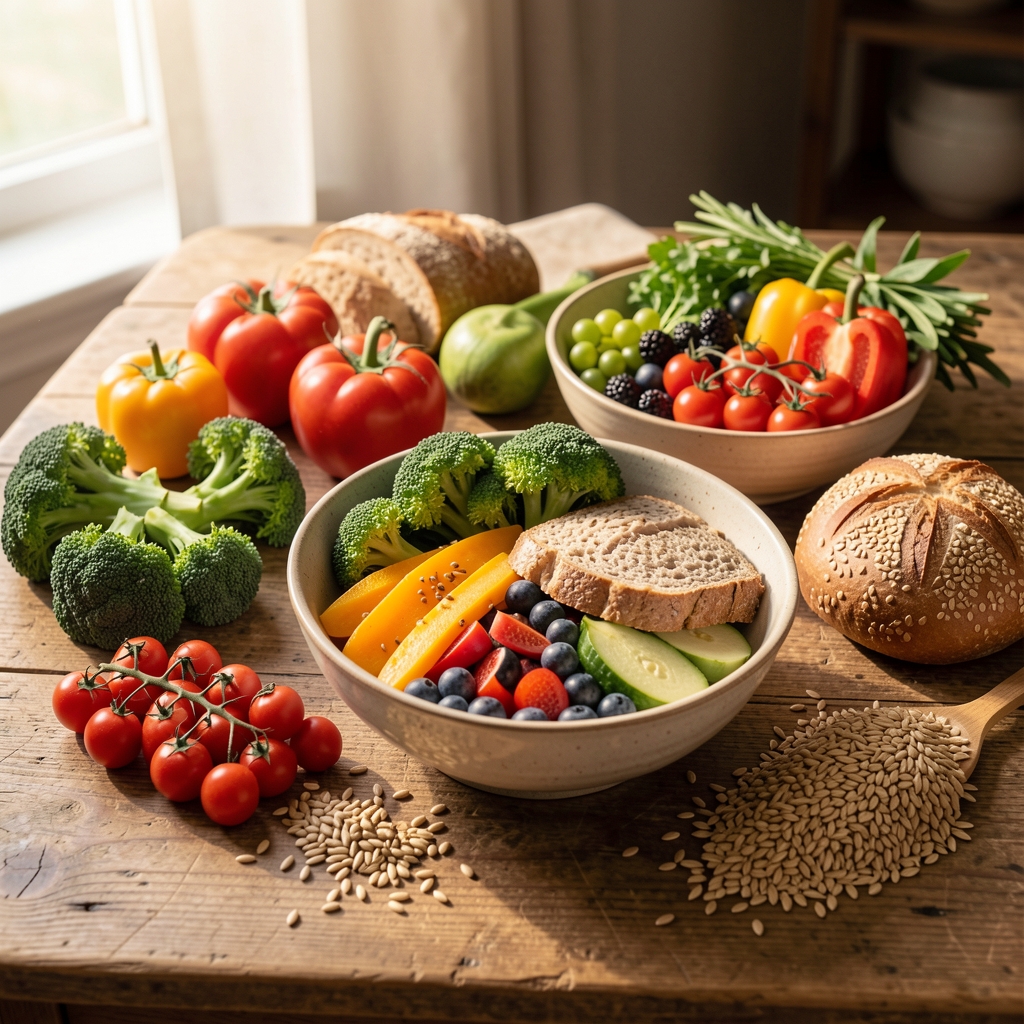
There is a particular quality of attention that settles in when one begins to look — really look — at what occupies a plate. Not with suspicion, nor with the arithmetic of restriction, but with the quiet interest of a naturalist noting proportions in a field sketch. This kind of attention, practised steadily across a full season, shifts something in the daily rhythm of eating that no external rule can quite replicate.
The Recurring Observation
It began, unremarkably, in late autumn. The shortening light of October had prompted a familiar impulse to eat more heavily — denser foods, larger servings, meals that lingered. There was nothing wrong with this inclination. Seasonal appetite is a sensible thing. But sitting with a bowl of roasted root vegetables and barley one evening, the writer noticed that the quantity on the plate was not proportionate to any felt need. It was simply habit.
This is the first recurring observation from the season of attention that followed: most plate sizes are not calibrated to hunger. They are calibrated to plate size, to habit, and to an ambient expectation about what constitutes a proper portion. The plate speaks first. The stomach speaks later, usually after the plate has been cleared.
Acknowledging this without judgement — simply noting it, as one notes a weather pattern — is the beginning of a different kind of relationship with meals. The writer did not begin weighing food or tracking numbers. She began, instead, to pause before eating and to consider what was actually present in front of her and whether it corresponded to a felt appetite.
What Changes When You Begin to Look
Across November and into December, the practice of simply looking — of engaging with the visual reality of a plate before the first forkful — began to accumulate results. Not dramatic ones. No sudden revelation. But small, recurring shifts in what she chose to prepare and how much she served.
The most consistent change was an increase in the proportion of vegetables relative to denser components. Not because vegetables were structured as virtuous, but because, once attention was applied, they were clearly underrepresented. A handful of spinach wilted into the background of a pasta dish. A modest scattering of roasted courgette alongside a substantial piece of fish. The balance was not deliberate — it had simply accumulated through inattention.
"Most plate sizes are not calibrated to hunger. They are calibrated to the plate itself — to habit, and to what we expect a proper meal to look like."
Adjusting this — slowly, without drama — involved no new ingredients and no expensive overhaul of the weekly shop. It required only a shift in where attention was directed during preparation. Serving vegetables first, and building the rest of the meal around them, was a method that emerged from observation rather than instruction.
Portion Awareness in the Context of Weight Management
The relationship between portion awareness and weight management is one that nutrition writers and researchers have documented for decades, though the findings are often presented in a register of alarm or instruction that can be counterproductive. What the writer found, across this quieter season of observation, was that awareness itself — without enforcement — was sufficient to produce gentle, sustained adjustments.
This aligns with observations gathered from published research examining attentive eating practices. Studies noting the eating patterns of individuals who demonstrate long-term weight balance — as distinct from those engaged in active restriction — frequently identify a recurring attentiveness to hunger signals, meal pacing, and the visual quality of the plate. These individuals are not counting. They are attending.
Attending to a meal means being present during it. It means not eating while reading, working, or watching. It means pausing occasionally to assess satiety rather than waiting for it to announce itself urgently. None of this is novel. But its consistent practice is rarer than the volume of writing about it might suggest.
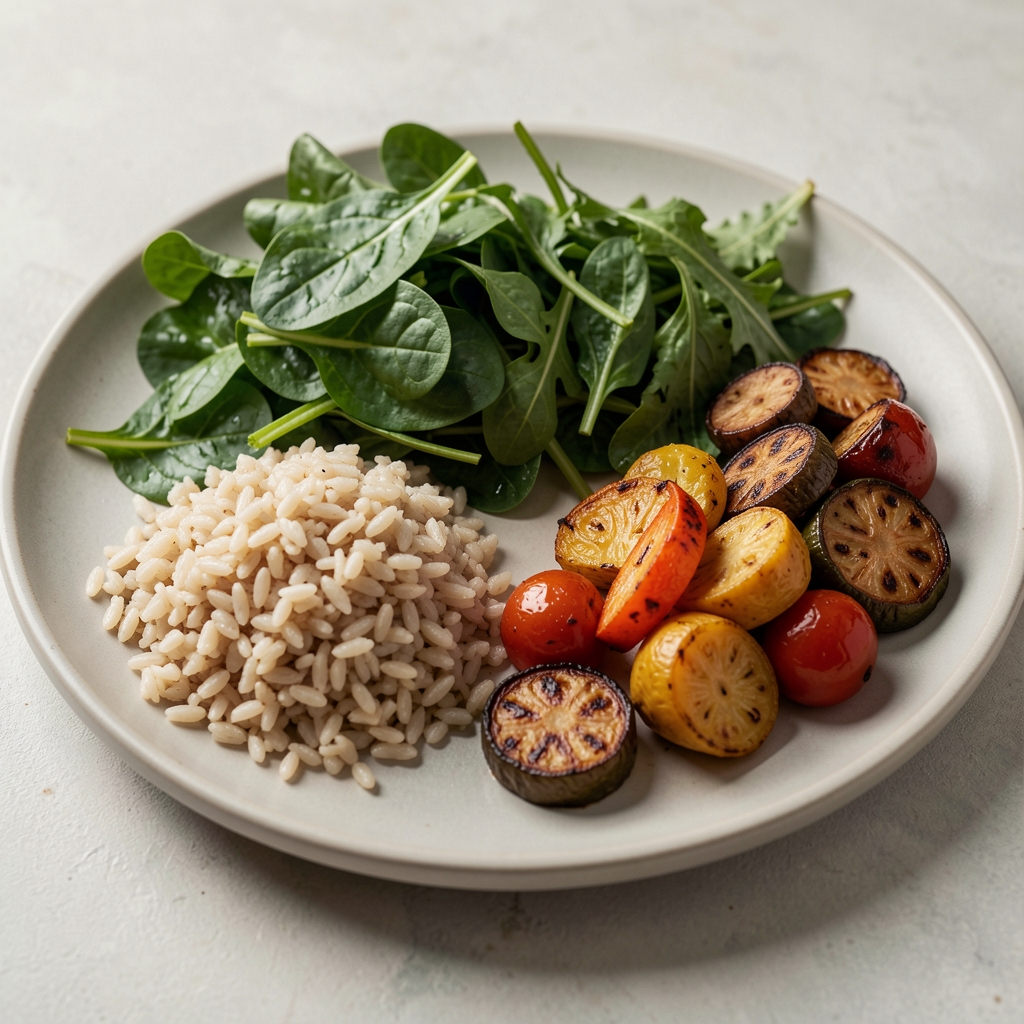
Seasonal root vegetables and grains — a recurring subject of the observation period
Balancing the Plate Across a Week
One of the more practical outcomes of the season's attention was a different approach to the week's meals in aggregate rather than as individual events. Viewing what one had eaten across three or four days — rather than making each meal an isolated decision — offered a different perspective on balance.
On a day when lunch had been generous, dinner could be lighter without that lightness feeling like deprivation. On a day of significant physical activity, a larger evening meal felt appropriate and was engaged with straightforwardly. This weekly view — regarding the body's intake as a flowing record rather than a series of isolated accounting entries — is consistent with how nutritional balance actually operates in the body.
Vegetables and fruits occupied a larger portion of each day's eating during the observation period than they had before. Not through calculation, but because, once attention was directed toward the plate, their presence — or absence — became visible. A meal without substantial vegetable content began to seem incomplete in a way it had not previously registered.
Seasonal Rhythms and Portion Awareness
Winter brought different produce: celeriac, Jerusalem artichokes, cavolo nero, blood oranges arriving in late January. Working with what was available and seasonal naturally produced variety in the diet, which in turn produced meals that were both nourishing and visually engaging. There is something in the relative effort of seasonal cooking — the unfamiliarity of some ingredients, the need to think about preparation — that encourages a more attentive relationship with the meal being prepared.
Fast, habitual meals are often less attended-to meals. This is not a moral observation — there are good reasons why meals are sometimes fast and habitual — but it is a practical one worth noting. The slower the preparation, in general, the more considered the portion, and the more engaged the eating.
By the end of the period — approximately fourteen weeks from the first deliberate observation — the writer had not changed her food choices dramatically. She had not adopted a named approach, nor eliminated any food category. What had changed was the quality of attention brought to the act of eating, and the visible effects of that attention on the proportions of what she prepared and consumed.
- Portion sizes are largely determined by habit and vessel size rather than appetite. Simple observation begins to shift this.
- Serving vegetables first, then building the remainder of the meal around them, naturally adjusts proportions without restriction.
- Viewing intake across several days rather than each meal in isolation allows natural equilibrium to emerge.
- Seasonal produce introduces natural variety and encourages more deliberate preparation and attentive eating.
- Sustained, gentle attention over a season produces more durable adjustments than short, intensive changes of approach.